
Packing clothes for a move takes more thought than just tossing everything into boxes. A little planning goes a long way toward keeping your wardrobe organized and wrinkle-free during the transition. Trusted moving services often recommend decluttering before you start packing to cut down on what you need to haul. This post covers sorting strategies, the right packing supplies, and smart techniques to protect your favorite pieces. Follow these tips, and you’ll have an easier time unpacking and settling into your new place.
Sort and Declutter
Start by going through every piece of clothing and deciding what stays, what gets donated, and what goes in the trash. Pull out anything you haven’t worn in over a year or items that are damaged beyond saving. Ask yourself whether each piece still fits and is in decent shape. Be honest: holding onto clothes just for sentimental value adds unnecessary bulk to your move. Make three separate piles: keep, donate, and toss. Donating gently used items helps someone else and reduces your packing load. Throw out anything torn, stained, or worn out to avoid dragging clutter into your new space.
Use Suitable Packing Supplies
The right packing materials keep your clothes protected throughout the move. Grab sturdy moving boxes in different sizes to fit everything from t-shirts to heavy sweaters. Wardrobe boxes with built-in hanging rods work well for dresses, suits, and other items that wrinkle easily. Wrap fragile or delicate items in bubble wrap or packing paper for extra protection. Clear plastic bins let you see what’s inside without digging through boxes. Sealable plastic bags help organize small stuff like socks, underwear, and accessories. Quality packing tape keeps everything sealed tight so boxes don’t pop open in transit. Good supplies make a real difference in how your clothes arrive at your new home.
Optimize Packing Methods
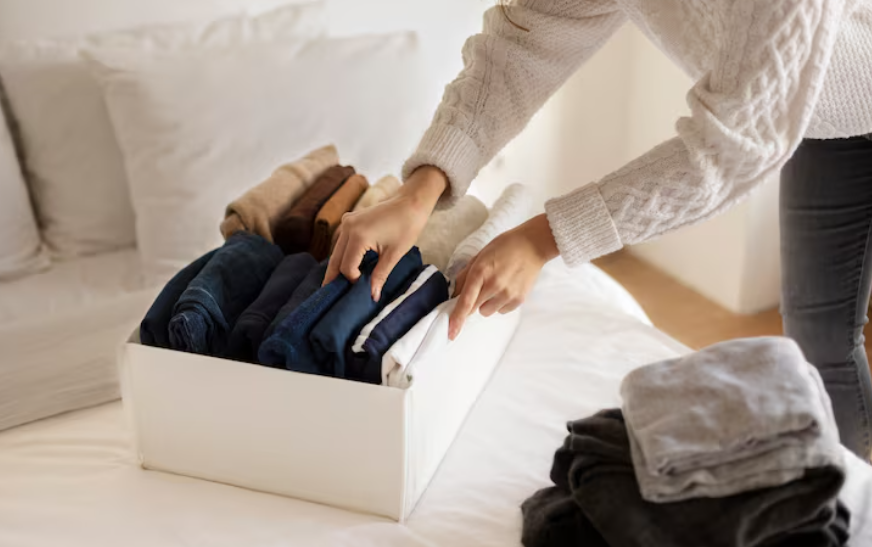
Smart packing techniques save space and keep your clothes in better shape. Roll your clothes instead of folding them. This takes up less room and reduces wrinkles. For formal or delicate pieces, wrap them in tissue paper before rolling to prevent creases. Vacuum-sealed bags work well for bulky items like winter coats, comforters, and sweaters because they compress everything. Stuff socks and small accessories inside shoes to use every bit of space in your boxes. These methods keep your clothes organized and protected throughout the move.
Organize by Category or Season
Grouping clothes by category or season makes packing and unpacking way easier. Separate your wardrobe into sections: tops, bottoms, dresses, outerwear, and so on. Then sort within each category by season, keeping warm-weather and cold-weather items apart. This approach helps you prioritize what to unpack first once you arrive. Pack everyday essentials and frequently worn pieces in boxes you can access right away. When you organize this way, you won’t be digging through random boxes on day one looking for what you need.
Protect Delicate Fabrics
Delicate fabrics need extra care during a move. Here’s how to keep them safe:
- Wrap Delicate Items: Use acid-free tissue paper around delicate fabrics before packing. This prevents color transfer and keeps dust off.
- Avoid Plastic Bags: Plastic traps moisture and can cause mold or mildew on delicate materials. Use breathable garment bags instead.
- Separate Fragile Pieces: Put delicate items in their own box or a separate section of a wardrobe box so heavier things don’t crush them.
- Handle with Care: Lift delicate fabrics gently to avoid stretching or tearing. Stack them neatly so they keep their shape.
Label and Inventory Boxes
Labeling boxes saves a ton of time when you’re unpacking. Write the contents and destination room on each box so movers know where everything goes. Keep an inventory list detailing what’s in each box, and give each box a number that matches your list. This comes in handy if you need to find something specific before you’ve fully unpacked. Color-coding boxes by room or using a numbering system speeds things up even more. When every box has a clear label, unpacking goes faster, and nothing ends up in the wrong place.
Related Topics: